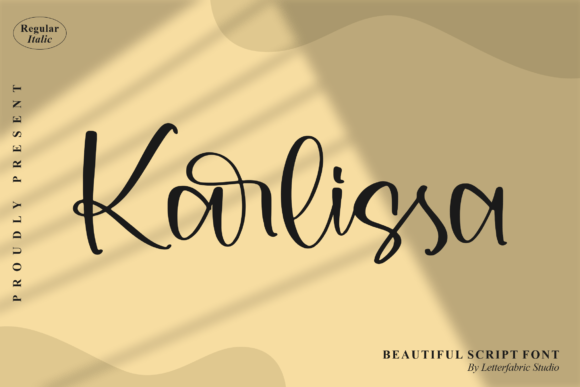
Karlissa: The Versatile Handwritten Font for Creative Makers
My desk is covered in the usual creative chaos: scraps of paper, pencil sketches, a sample of the linen paper I'm considering, and my laptop screen glowing with a new design. This morning, I’m finalizing the label for a small batch of lavender-scented candles. The scent note, the ingredients, the brand name—all need to be arranged into something that feels both elegant and personal. I’ve been testing a few fonts, but as soon as I typed my brand name in Karlissa, the entire design clicked. The font isn't just text; it’s a personality. It brought a soft, confident grace to the label that a standard script or a rigid sans serif couldn’t achieve. It felt, instantly, like the right hand had written it.
The Personality of a Handwritten Touch
Karlissa is a beautiful handwritten font with a distinct creative appeal. Its lines flow with a natural, slightly refined rhythm—it’s casual enough to feel approachable, yet polished enough to convey quality. The characters have a charming consistency, with gentle curves and balanced proportions that make it exceptionally versatile. Its mood is warm and artistic, perfect for projects that need to feel crafted, not manufactured. Whether you’re looking at a single word or a short phrase, Karlissa carries a visual personality that whispers handmade, boutique, and special. For makers, this emotional resonance is a direct line to our customers’ perception of value and care.
Bringing Karlissa to Life on Your Products
The magic of a great font like Karlissa happens when it moves from the digital screen onto physical or digital products. It’s not just for typing; it’s for creating.
Consider your product labels. A honey jar, a candle, a small batch of soap—Karlissa gives the product name and details a signature look. For stickers, whether for planner decorations or as standalone products, its clear, flowing letters work beautifully even at smaller sizes, provided you give them enough space to shine. Greeting cards and wedding invitations come alive with it; writing "Thank You" or the names of a couple in Karlissa adds that personal, handwritten touch without the pressure of perfect penmanship.
For larger applications, think of farmhouse-style signs, wedding welcome boards, or printable wall art quotes. The font becomes a central design element. On fabric, like tote bags or t-shirts, Karlissa translates wonderfully, especially when used for a focal word or phrase. On mugs and packaging, it elevates the item from generic to gift-worthy. Even in your digital realm—the preview images for your printables, the headers in your planner pages, the branding on your shop materials—Karlissa provides a cohesive and attractive aesthetic that builds brand recognition.
Where Karlissa Works Best
Karlissa excels as a display font. It’s ideal for short phrases, names, titles, decorative wording, and product labels. I use it predominantly for headlines, logos, brand names, and key information on my packaging. It’s perfect for the prominent text on a book cover, the main quote on a poster, or the elegant labeling on a product package. While its clarity is good, for longer paragraphs of body text—like detailed product descriptions on a card or lengthy instructions—I tend to pair it with a simpler, more readable font. This keeps the design clean and ensures all information is easily accessible.
Practical Advice for Makers and Sellers
When you’re ready to integrate Karlissa into your workflow, a few practical considerations will help ensure your final products look their best.
First, readability. For physical products like small stickers or tiny product tags, test your design at actual size before finalizing. Make sure the elegant loops and connections of Karlissa are clear and uncrowded. When using cutting machines like Cricut or Silhouette, ensure your text is converted to a path or outline cleanly; the flowing script should cut smoothly without any unexpected breaks.
Font pairing is key. Karlissa’s handwritten style pairs beautifully with a clean, neutral sans serif font for supporting text—think of using it for a product name, with a simple sans for the ingredients list. It can also complement a simple serif font for a more classic, editorial feel, perfect for invitations or book covers. This pairing creates a balanced hierarchy in your design.
Before using any font for commercial purposes, it’s essential to check its licensing. For selling physical products, templates, printables, or digital downloads featuring Karlissa, confirm that the license includes commercial use. Also, explore the font's included features. Many premium handwritten fonts like Karlissa come with alternates, ligatures, or swashes that can add even more uniqueness to your designs. Check for multilingual support if your market requires it, and ensure you have the file formats (like OTF, TTF) that work with your design software.
A Font for Every Season and Story
The versatility of Karlissa means it can adapt to your shop’s seasonal rhythms. For spring, it brings a fresh elegance to garden party invitations or herb jar labels. In autumn, it adds a warm, rustic charm to pumpkin spice candle packaging or harvest-themed wall art. For holiday products, Karlissa on gift tags, seasonal mugs, or festive tote bags feels celebratory and personal. It’s a font that doesn’t lock you into one aesthetic; it enhances the story you’re telling with each product.
Using Karlissa across your shop materials—from your main logo to your social media graphics, your product labels to your packaging tape—builds a strong, consistent brand identity. Customers begin to recognize your style, associating that beautiful handwritten look with your craft. This consistency, powered by a reliable and appealing typeface like Karlissa, is a subtle but powerful tool for building trust and engagement with your audience.
In the end, for makers like us, our tools need to serve both beauty and function. Karlissa does just that. It’s a design asset that translates our creative intent into a tangible, attractive reality on everything we make. It’s the flourish on a label, the signature on a card, the charm on a bag—a font that feels like part of the handmade story itself.